This page may contain affiliate links. If you click and buy, we might get a small commission at no cost to you.
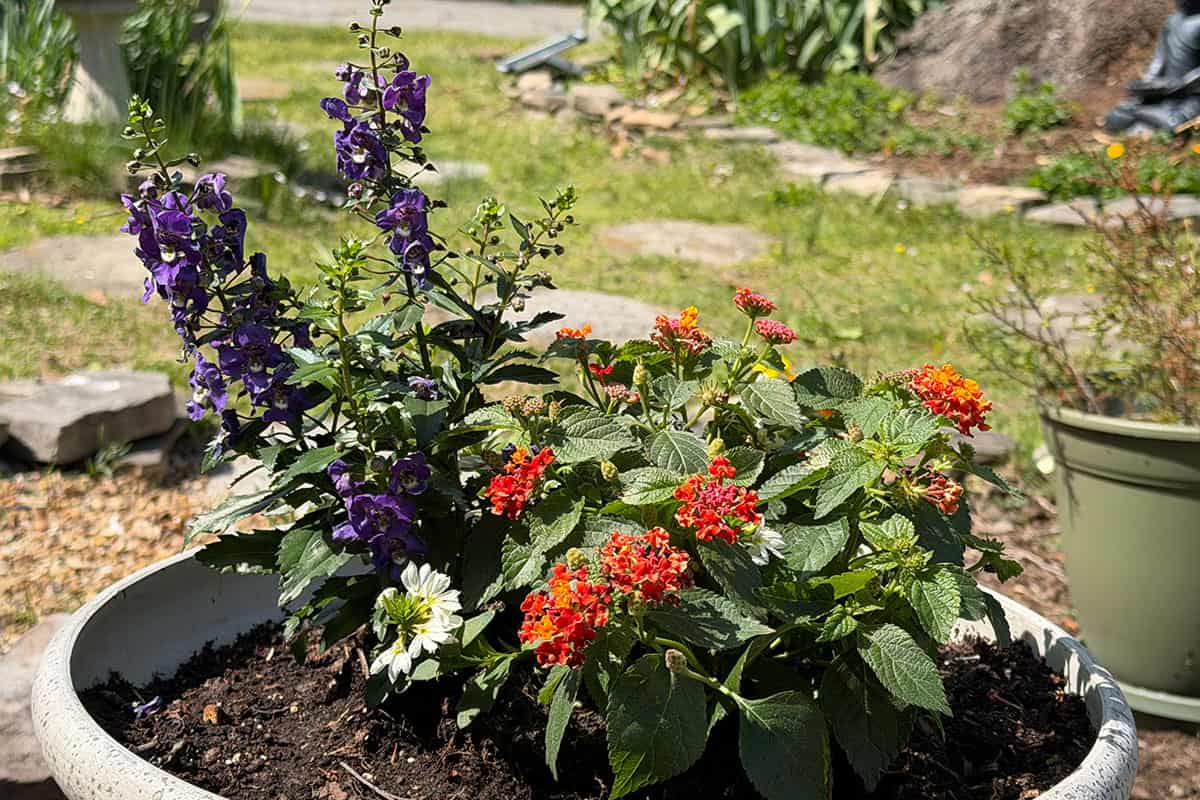
We picked up this red white and blue flower pot combination from a local nursery, and it’s a great example of how a simple three-plant mix can look full, balanced, and colorful right away. We actually got one just like this last year, and it really did well, it filled out and got pretty big over time, and we had hummingbirds coming around it regularly. These types of planters are popular in the summer, especially around Memorial Day and the 4th of July, but they also hold up well all season if you choose the right flowers. Here’s exactly what’s in this pot and why it works.
1. Angelonia (purple, “blue” height)
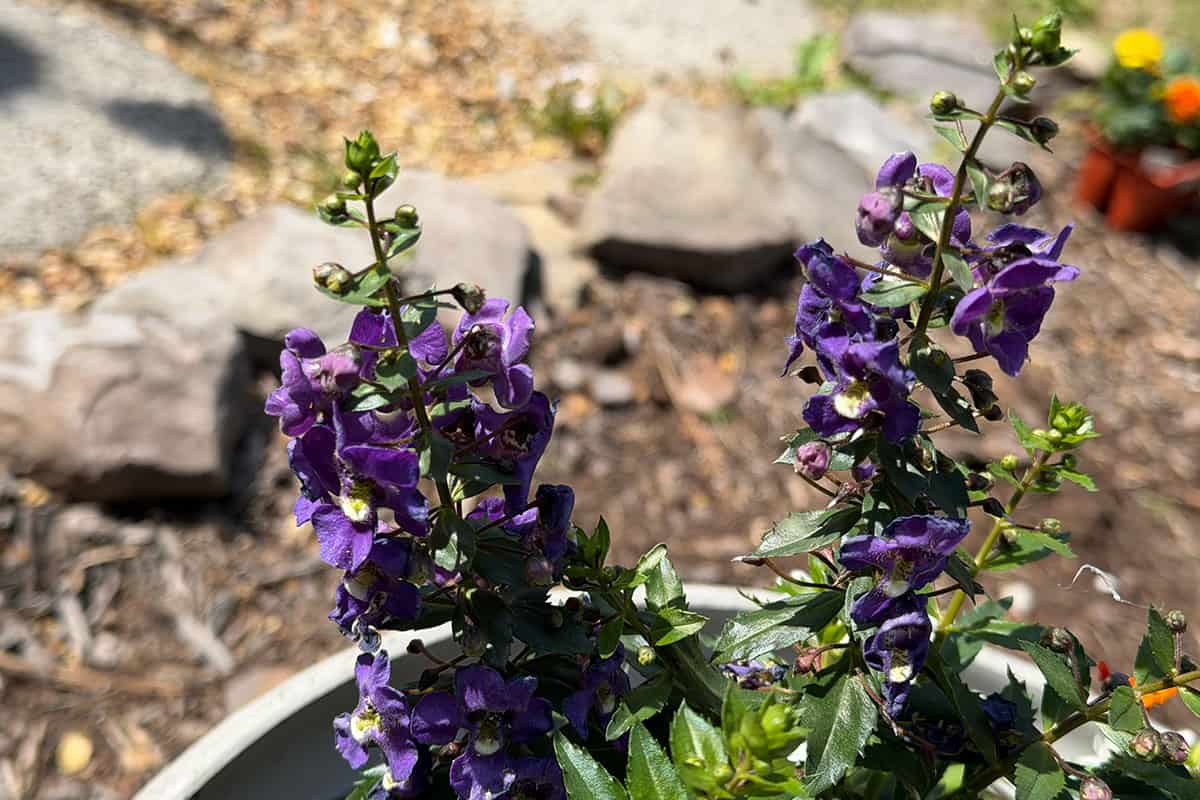
- Tall, upright flower spikes that add vertical height
- Handles full sun and high heat without fading
- Often used as the “thriller” in container arrangements
Angelonia, sometimes called summer snapdragon, is what gives this planter its height and structure. The flower spikes grow upward and stand above the rest of the arrangement, which helps the whole pot look more layered and intentional instead of flat. The purple tones read as blue in most outdoor lighting, which is why it works well in a red white and blue color scheme.
This plant thrives in full sun and doesn’t mind hot conditions, which makes it ideal for outdoor pots that sit in direct light most of the day. Unlike some taller flowers, it tends to hold its shape well once it gets established and doesn’t flop over easily. That makes it a reliable centerpiece in mixed containers like this one.
Another reason angelonia works so well here is that it doesn’t require much maintenance. It continues blooming without needing constant deadheading, and it pairs well with other plants that have similar watering and sunlight needs. It’s one of those low-effort plants that still makes a noticeable impact.
- Salvia – tall spikes with strong blue tones and great pollinator appeal
- Lobelia – softer blue flowers that work well in cooler conditions
- Delphinium – bold blue spikes, best for larger containers
- Blue verbena – airy clusters that add height without bulk
2. Lantana (red/orange filler)
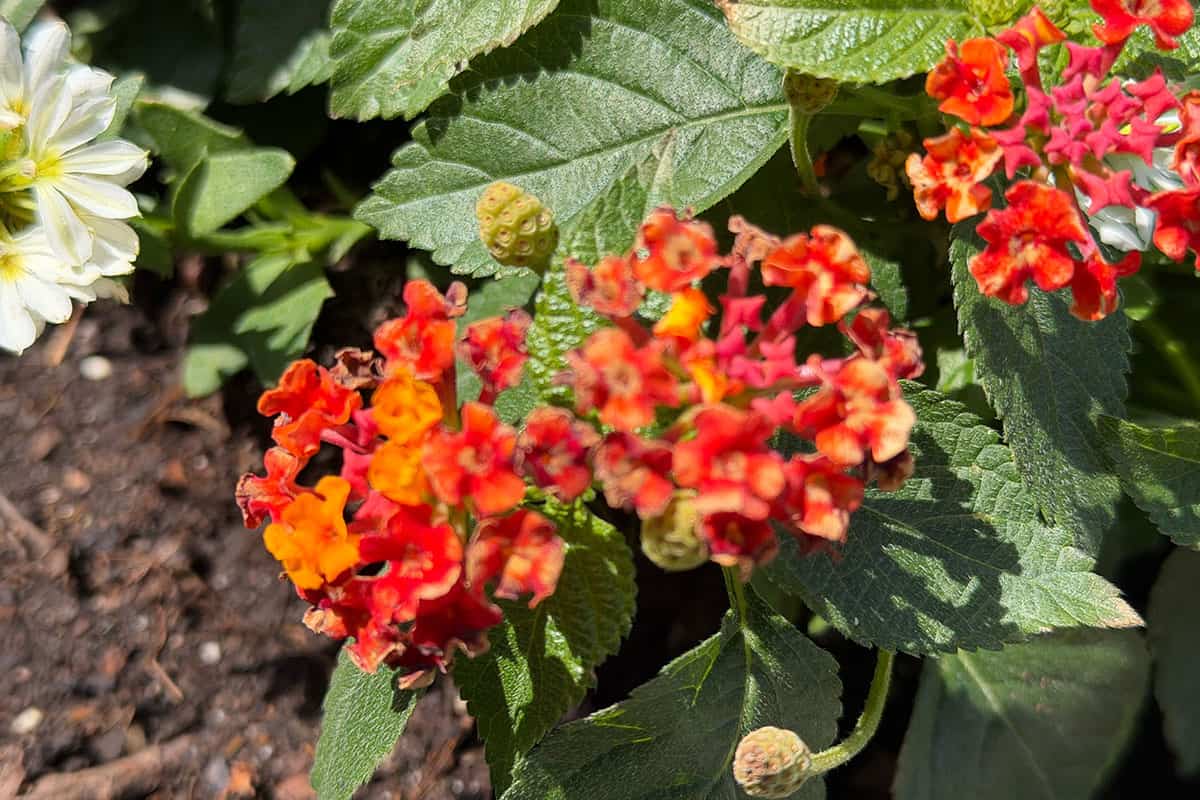
- Clusters of small flowers in red, orange, and yellow tones
- Extremely heat and drought tolerant once established
- Attracts butterflies and other pollinators
Lantana is the main source of color in this planter, filling in the middle space with bright, warm tones that contrast nicely against the white and purple. The clustered blooms create a dense, full look that helps the pot feel complete and vibrant from most angles.
This is one of the tougher summer flowers you can use in a container. Lantana handles hot, sunny conditions very well and can tolerate drier soil better than most flowering plants. That makes it especially useful in pots, which tend to dry out faster than in-ground beds.
It also tends to bring some activity to your yard by attracting butterflies and other pollinators. Even in a small container like this, you’ll often notice insects visiting the blooms, especially during the warmer parts of the day.
- Geranium – classic red blooms with strong structure and long-lasting color
- Calibrachoa – smaller petunia-like flowers that bloom heavily all season
- Petunia – easy, colorful option that fills space quickly
- Verbena – low-growing clusters that spread and add fullness
3. White trailing flower (scaevola)
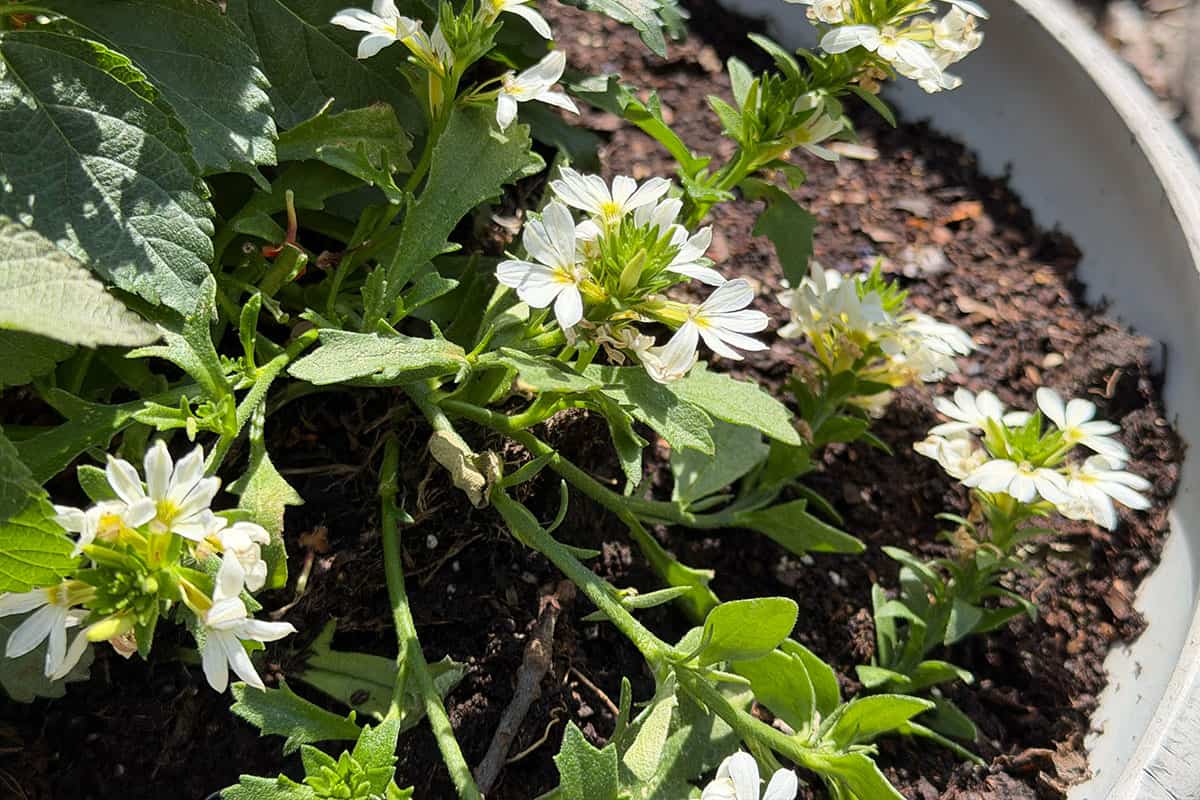
- Fan-shaped blooms that appear slightly off to one side
- Spreads outward and softens the edges of the pot
- Generally does well in full sun and warm weather
I’m pretty sure this white flower is scaevola, also called fan flower, which is commonly used in mixed containers like this. It has a lower, spreading growth habit that helps fill in around the edges rather than growing straight up like the angelonia.
The white blooms add contrast and help balance out the stronger red and purple tones. The flower shape is a little different from typical round blooms, which adds some visual variety without making the planter look too busy.
Plants like this are usually chosen because they can handle the same conditions as the others in the pot, full sun, heat, and regular watering. As it grows, it should continue to spread slightly and help round out the overall shape of the container, giving it that full, finished look.
- Alyssum – small white flowers with a light fragrance that spread easily
- Bacopa – delicate blooms that trail nicely over container edges
- White petunia – fuller flowers that brighten up any combination
- Candytuft – compact white blooms that add a clean, dense look
How big will this flower pot get over time?
One thing people don’t always expect with these nursery planters is how much they can grow once they get established. When we got one like this last year, it started out looking compact and neat, but within a few weeks it had filled out and nearly doubled in size.
The lantana will usually bulk up the most, spreading outward and filling in the center of the pot. The angelonia will continue to push upward, adding more height as new flower spikes form. The white trailing plant will slowly spread toward the edges and start to soften the sides of the container.
By mid to late summer, a planter like this can look completely different from the day you bought it. That’s a good thing, but it also means you want to give it enough space early on so it doesn’t feel crowded or start competing for light.
If anything starts to take over, you can lightly trim it back to keep the shape balanced. Otherwise, this is one of those combinations that tends to grow into itself and look better as the season goes on.