This page may contain affiliate links. If you click and buy, we might get a small commission at no cost to you.
An old concrete slab in the backyard can feel like one of those awkward leftover spaces that never really gets used. Maybe an old shed used to sit there, maybe it was part of a patio years ago, or maybe it has just slowly become a forgotten patch of cracked concrete behind the house.
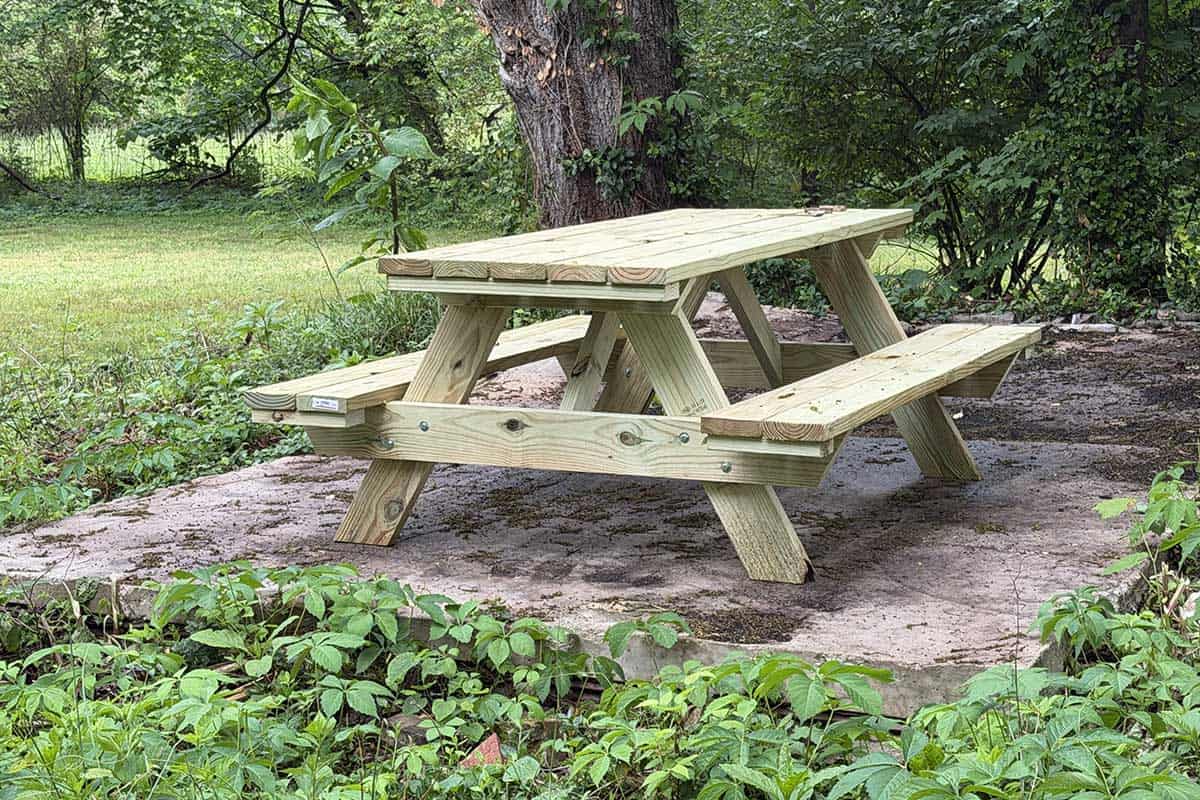
Recently, we finally decided to do something with ours instead of just mowing around it year after year. We ended up putting a picnic table on it, and honestly, it immediately made the area feel more useful and intentional. That also got me thinking about all the other ways people could reuse an old slab instead of tearing it out.
Of course, every slab is different. The location, condition, size, drainage, stability, and distance from the house can all affect what makes sense for your space. Some slabs may work perfectly for seating areas or container gardens, while others may be strong enough for heavier uses like sheds or even a hot tub. We’ll cover those things later in the article, but first, here are some practical ideas worth considering.
Article highlights
- Old concrete slabs can often be reused instead of removed
- The best use depends heavily on location, drainage, and slab condition
- Simple upgrades like seating, flowers, or bird feeders can completely change the space
- Some slabs may safely support larger projects like sheds or hot tubs
8 ideas for an old concrete slab in your backyard
1. Fire pit seating area
One of the easiest ways to reuse an old slab is turning it into a simple fire pit area. Concrete already gives you a stable, level surface for chairs, small tables, and outdoor seating. Even a fairly ugly slab can start feeling intentional once you add a few chairs and clean up the surrounding area.
This option also works well because it usually doesn’t require the slab to be perfect. Small cracks or cosmetic flaws generally won’t matter much for a casual backyard gathering space. You can buy or dig up some large rocks and make a natural fire pit right on the slab, or you can buy a cheap metal fire pit from your local home store for about $100 or so.
2. Picnic table / outdoor eating area
This is the direction we personally went with our slab. For years it was basically just an old forgotten concrete pad behind the house that we mowed around. Weeds grew around it eventually covering it in a jungle of vines and plants. We decided to clear it off this year and do something with the free slab. Adding a picnic table instantly changed how the space felt. It’s about a hundred yards behind the main house, so now we have more of a reason to walk all the way back there.
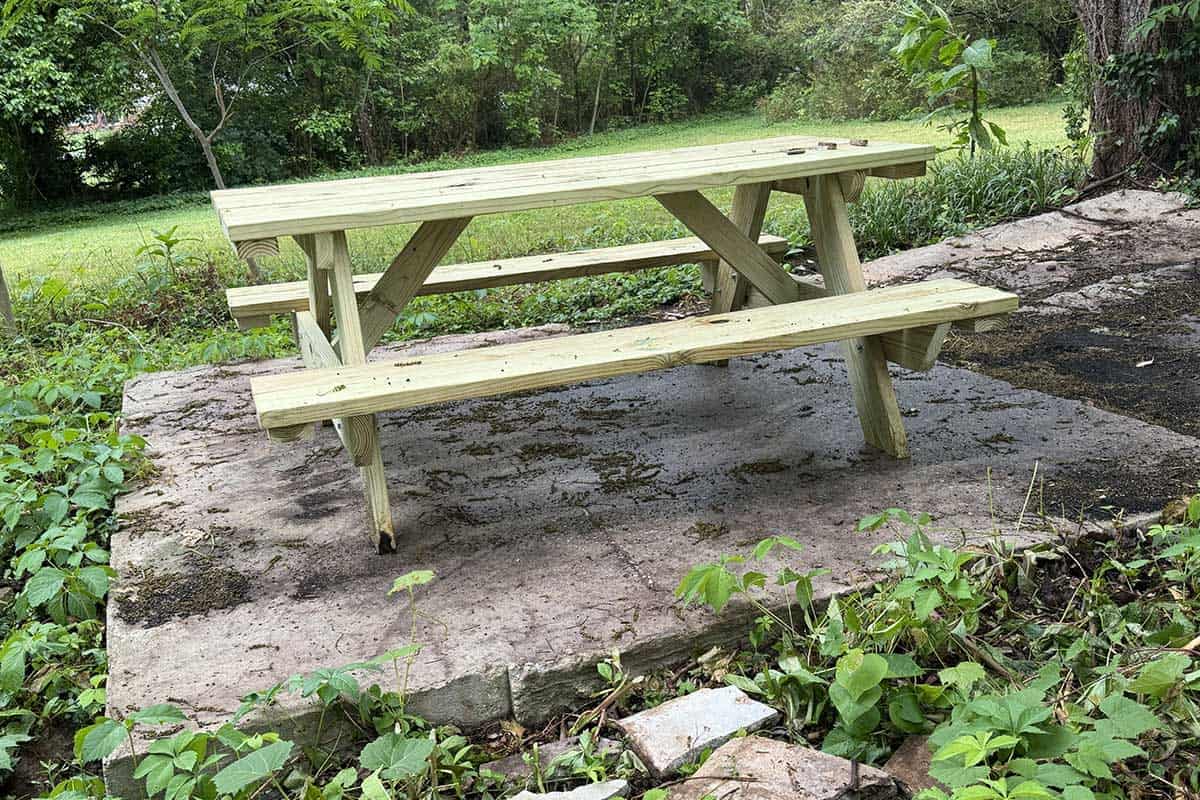
What I like about this option is how simple it is. You don’t need a major renovation or thousands of dollars invested into a patio project. Just creating a place to sit outside can suddenly make an unused area feel connected to the rest of your yard again. I found someone on Facebook Marketplace selling really nice 6 ft picnic tables for $200.
3. Container garden and flower area
Old slabs actually work really well for container gardening. You avoid muddy ground, weeds become less of a problem, and pots can completely change the appearance of the space.
This is especially nice if the slab gets decent sunlight throughout the day. You can use flower pots, raised containers, hanging baskets, herbs, or even small vegetable plants to soften the look of the concrete and make the area feel more alive during spring and summer. Unfortunately our slab is too far away for a hose to reach, but I’d say we’re in the minority.
4. Grill or smoker station
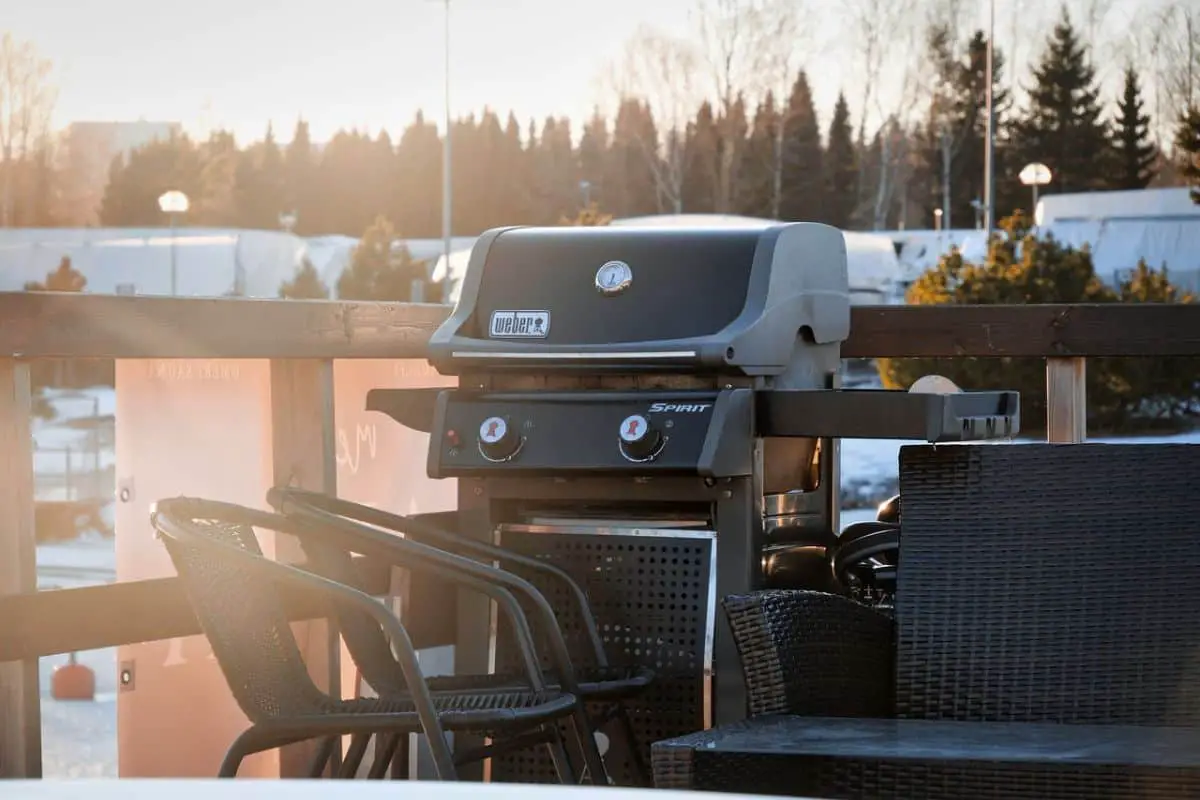
A lot of homeowners naturally end up using old slabs as grill areas because the concrete already provides a durable, non-muddy surface close to the house.
This can also help keep heavy grills or smokers from damaging grass around your patio. Depending on the size of the slab, you may even have enough room for prep tables, chairs, or outdoor storage nearby.
5. Pergola or covered patio area
Some slabs are already positioned perfectly to become an outdoor sitting area with a pergola, shade sail, or partial roof structure overhead.
This is obviously one of the more involved and expensive options on the list, but it can completely transform an old unused space. Even if you don’t build the full structure immediately, an existing slab can give you a major head start compared to starting from scratch elsewhere in the yard.
6. Bird feeding and birdwatching area
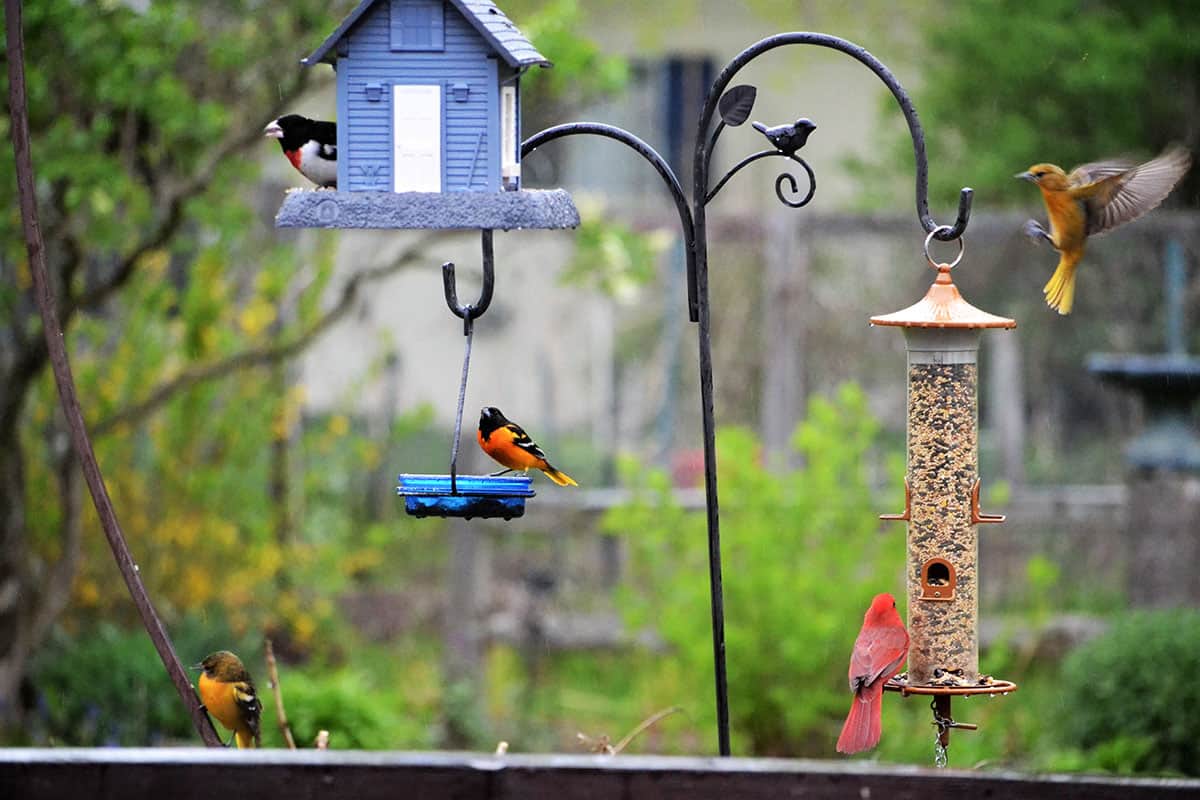
A quieter slab farther back in the yard, perhaps away from loud children, can make a surprisingly good bird feeding area. You already have a stable place for chairs, benches, bird baths, potted plants, or even feeder poles nearby.
This idea works especially well if your slab already sits near trees, shrubs, or natural cover where birds feel comfortable visiting. A slab right out in the open with no cover nearby may not do as well for this purpose.
7. Base for a shed or greenhouse
Many old slabs originally supported some type of structure already, so reusing them for a shed or greenhouse often makes a lot of sense.
Before doing this, you’d want to make sure the slab is still reasonably level and structurally sound. But if it is, you may already have a ready-made foundation sitting in your backyard.
A third of our slab is completely shot and cracked due to 2 large trees near one end. Luckily we still have about 10×10 of completely flat concrete, the other end is just slanted. So adding anything that needs to be level on that end is out of the question.
8. Hot tub base
Some older slabs may be strong enough to support a hot tub setup, though this is one of the few ideas where structural condition becomes extremely important. Assuming you’re close enough to get electricity and all the other things a hot tub needs in order to operate, there are a few other things to consider.
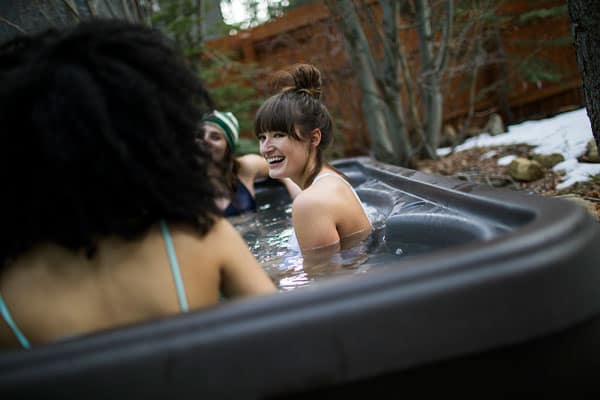
A filled hot tub can weigh several thousand pounds once water and people are added. Because of that, you’d want to carefully inspect the slab and possibly consult a professional if you’re unsure about the integrity of the concrete or the ground beneath it. Our slab has several large groundhog tunnels beneath it, while we don’t think it will affect our picnic table usage, it might very will buckle under the weight of a hot tub.
How do I know what my slab can safely be used for?
Distance from the house
One of the biggest things that affects your options is how close the slab sits to your home. A slab right outside the back door naturally works better for most things like dining, grilling, seating, and entertaining.
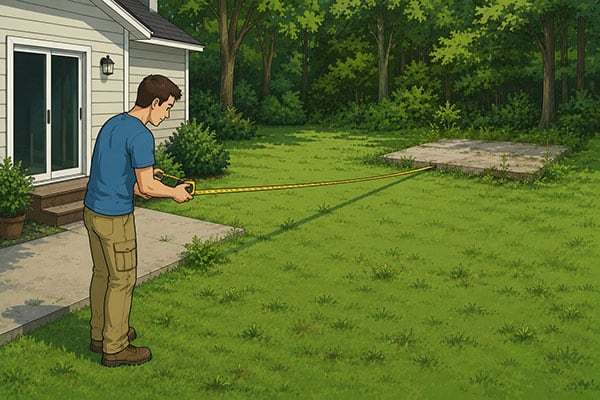
Meanwhile, a slab farther back in the yard generally has less potential. However it may still be used for things like for gardening, birdwatching, storage, or a greenhouse setup.
Condition of the concrete
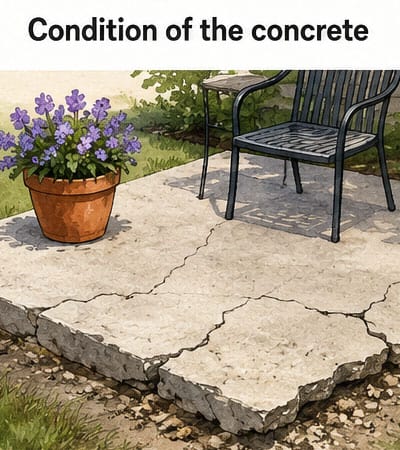
Not every slab needs to look perfect to still be useful. Minor cracks or discoloration may not matter at all for flower pots, seating, or a picnic table.
But larger cracks, crumbling edges, major settling, or lifting sections can become more important if you plan to support heavier weight or build permanent structures on top of it. While concrete can last for decades, its long-term durability depends heavily on proper installation, drainage, soil stability, and maintenance.
According to the Portland Cement Association, concrete pavements often have an average service life of 30 to 50 years, though the lifespan of any specific slab depends on installation, drainage, soil conditions, climate, and maintenance.
Ground stability underneath
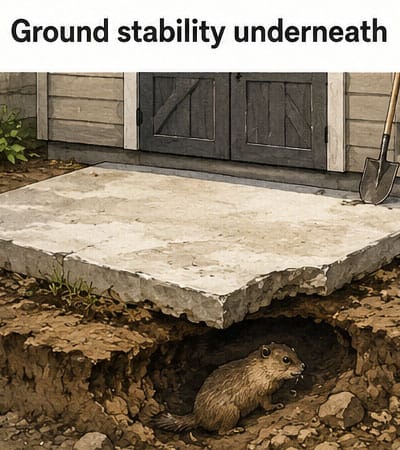
Sometimes the biggest issue isn’t the slab itself, but the soil beneath it. Over time, erosion, water movement, tree roots, and settling ground can cause sections of concrete to shift or sink.
For lightweight uses this often isn’t a huge deal. But for things like sheds, pergolas, or hot tubs, ground stability matters much more. One thing to watch for is groundhog tunnels beneath old slabs which is very common and could compromise slab integrity.
Drainage and standing water
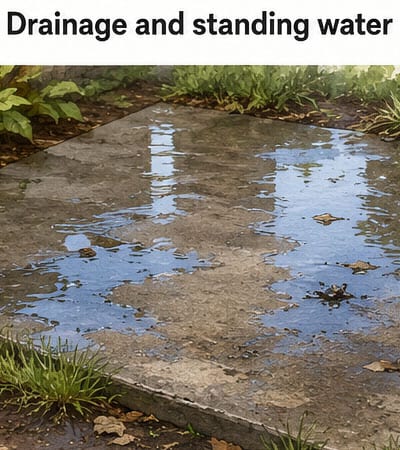
Pay attention to how the slab behaves after heavy rain. Some slabs stay relatively dry while others collect puddles that linger for days.
Poor drainage can create slippery surfaces, algae growth, mosquitoes, and long-term deterioration of the concrete itself.
Sunlight and shade
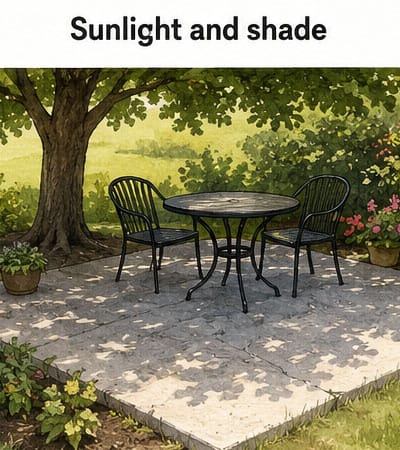
The amount of sunlight your slab receives can completely change what works best there. Full sun may be ideal for flowers, vegetables, and container gardens.
A shaded slab under trees may feel much better for seating, relaxing, or birdwatching during the summer months.
Tree roots nearby
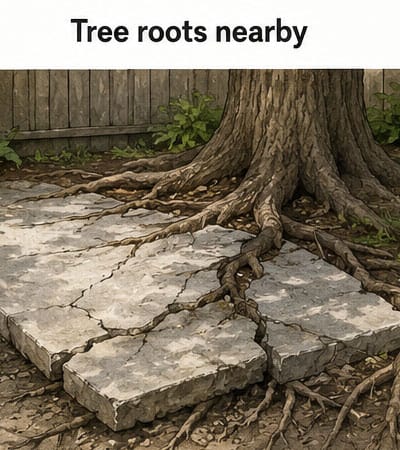
Large trees near older slabs can slowly create problems over time. Roots may continue pushing upward beneath the concrete and gradually make cracks or uneven sections worse.
This doesn’t automatically make the slab unusable, but it is something worth paying attention to before investing heavily into the area.
Utilities and convenience
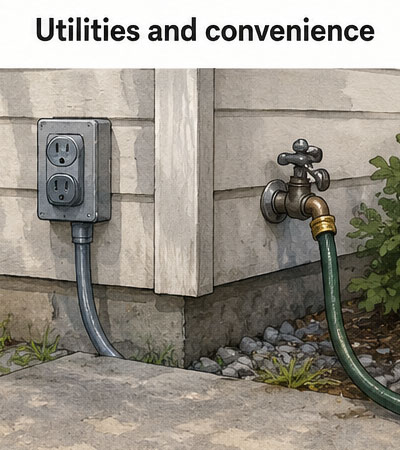
Water and electricity can heavily influence your plans. Access to nearby outlets or water spigots makes some ideas much easier than others.
For example, lighting, pumps, outdoor fans, hot tubs, or greenhouse equipment may require additional utility access that some slabs simply don’t have nearby.
How much work you actually want to do
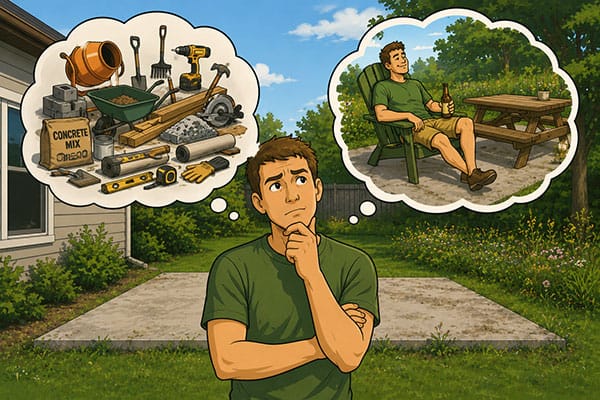
This is probably the most important factor of all. Some people simply want to clean the slab up and make it useful again without spending much money.
Others may see the slab as the beginning of a much larger backyard project. Neither approach is wrong. It just depends on your budget, time, and goals for the space.
In the end I didn’t want to do a ton of labor, just get some use out of a decades old abandoned slab in a house I purchased. We’ve added the picnic table, I plan on planting wildflowers around it, and possibly more. For now it’s a nice place to go eat a picnic lunch that we didn’t have before.